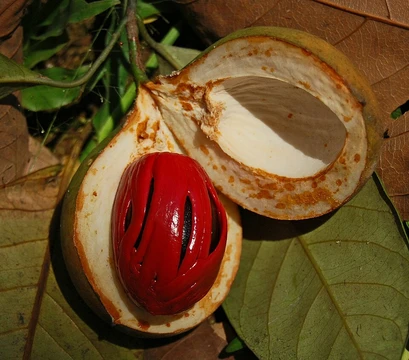
Plant reproductive morphology
Study of plant parts concerned with sexual reproduction.

Plant reproductive morphology is the study of the physical form and structure of those parts of plants directly or indirectly concerned with sexual reproduction. Among all living organisms, flowers, which are the reproductive structures of flowering plants (angiosperms), are the most varied physically and show a correspondingly great diversity in methods of reproduction. The breeding system, or how the sperm from one plant fertilizes the ovum of another, depends on the reproductive morphology, and is the single most important determinant of the genetic structure of nonclonal plant populations.
- field
- Plant reproductive morphology
- known_for
- Study of the physical form and structure of plant parts concerned with sexual reproduction; understanding that pollination involves both biotic and abiotic interactions; basis for Darwin's theory of e
Lore & Background
Charles Darwin's theories of natural selection utilized this work to build his theory of evolution, which includes analysis of the coevolution of flowers and their insect pollinators. Plants have complex lifecycles involving an alternation of generations: the sporophyte produces spores which grow into the gametophyte, which produces gametes that unite to form a new sporophyte.
Reader's Guide
Plant reproductive morphology is significant because it underpins the understanding of plant breeding systems, which are the single most important determinant of the genetic structure of nonclonal plant populations. The study revealed that pollination involves both biotic and abiotic interactions, a key insight that Charles Darwin used to develop his theory of evolution, including the coevolution of flowers and their insect pollinators. The morphology of flowers varies enormously, from bisexual flowers with both stamens and carpels to unisexual flowers that are either staminate (male) or carpellate (female). Species may be homoecious (only bisexual flowers), monoecious (both male and female flowers on the same plant), or dioecious (male and female flowers on separate plants). Some plants, like Amborella and Arisaema triphyllum, can change their sex over time. This complexity has led to a rich terminology for describing the various sexual conditions found in plant populations.
Did You Know?
- About 6% of angiosperm species are dioecious, and 7% of genera contain some dioecious species.
- In bryophytes (liverworts, mosses, and hornworts), the sexual gametophyte is the dominant generation; in ferns and seed plants, the sporophyte is dominant.
- Amborella, the first known group of flowering plants to separate from their common ancestor, is dioecious and can change its sex over time.
- Arisaea triphyllum (Jack-in-the-pulpit) expresses sexual differences at different stages of growth, covering a multitude of sexual conditions in its lifetime.
Defining the Field: Morphology Versus Anatomy
Plant morphology, also called phytomorphology, focuses on the physical form and external structure of plants, setting it apart from plant anatomy, which delves into internal organization at the microscopic level. Despite this distinction, the two fields are not entirely separate; at the smallest scales of investigation—ultrastructure visible only through electron microscopy and cytology examined with optical microscopes—morphology and anatomy overlap considerably. The morphologist's toolkit spans an enormous range of scales, from the cellular level up to the overall architecture and growth habit of a whole organism. A tree's branching pattern, whether a plant appears as a shrub, herb, or grass, and the arrangement of its parts all fall within morphological inquiry. This breadth makes morphology a uniquely integrative discipline. It serves as a bridge between the visible world of plant form and the invisible world of cellular organization, and it underpins practical tasks like visual identification of species. Moreover, modern molecular biology has begun probing the genetic and transcriptomic processes that govern how plant morphologies are conserved or diversified across lineages, adding a new layer to what was once a purely descriptive science.
Homology and Convergence: Reading Evolution in Plant Form
At the heart of plant morphology lies a comparative method: the morphologist examines structures across many species, whether closely related or distantly so, and asks why they look alike. The answer typically falls into one of two categories. Homology arises when structures in different species are built and developed through shared, inherited genetic pathways, pointing to common ancestry. A classic example is the leaf: pine, oak, and cabbage leaves look radically different, yet they share fundamental structural arrangements. The morphologist pushes further, revealing that cactus spines, though seemingly unrelated, develop from the same basic plan as true leaves and are therefore homologous. Convergence, by contrast, occurs when unrelated organisms independently evolve similar forms in response to comparable environmental pressures. The feathery fronds of the alga Bryopsis plumosa and the stems of Asparagus setaceus both display a delicate, plume-like branching pattern, yet one is an alga and the other a flowering plant. Likewise, many cacti and Euphorbia species share a striking growth form despite belonging to widely separated families, a shared solution to surviving hot, arid conditions. Distinguishing homology from convergence is essential for evolutionary biologists who rely on morphological interpretation to build accurate phylogenies.
Reproductive Structures and the Discovery of Alternation of Generations
While vegetative morphology covers the shoot system of stems and leaves and the root system of vascular plants, reproductive morphology deals with structures that are far more varied and often unique to particular plant groups. Flowers, seeds, fern sori, and moss capsules are all examples of reproductive organs whose detailed study has shaped our understanding of plant biology. Unlike vegetative structures, which follow relatively consistent plans across vascular plants, reproductive structures tend to be specific to a given lineage, making them both a challenge and a treasure for morphologists. The careful examination of these reproductive forms across diverse plant groups led to one of the foundational discoveries in plant biology: the alternation of generations, a life-cycle pattern in which a multicellular sporophyte alternates with a multicellular gametophyte. This pattern is found in all plants and most algae, underscoring how reproductive morphology is not merely a cataloging exercise but a window into deep evolutionary relationships. The study of reproductive structures thus overlaps heavily with biodiversity research and plant systematics, as the form of a flower or a capsule can carry critical information about how a species relates to its nearest and most distant relatives.
Development, Ontogeny, and Molecular Constraints on Form
One of the most distinctive features of plant morphology is its focus on developmental pattern—the process by which structures originate and mature as a plant grows. Animals, by contrast, produce essentially all their body parts early in life. Plants do the opposite: a living plant always retains embryonic tissues and continuously generates new structures throughout its entire lifespan. The way a new leaf, flower, or root matures can depend on when in the plant's life it began developing and on the environmental conditions it encounters during growth. A morphologist studies this dynamic process, its causes, and its outcomes, an inquiry that overlaps with plant physiology and ecology. Recent advances in molecular biology have deepened this picture. Researchers investigating transcriptome conservation patterns have identified molecular signatures that mark crucial ontogenetic transitions during the plant life cycle. These conserved molecular checkpoints may act as evolutionary constraints, limiting how much morphological diversification can occur at certain developmental stages. In this way, the study of how plant form develops over time is now being linked to the genetic and molecular mechanisms that both preserve and permit variation across the plant kingdom.
Frequently Asked Questions
What is Plant reproductive morphology?
It is the branch of plant biology focused on describing the physical shapes and structures of the plant parts that handle sexual reproduction, whether directly or indirectly. In a fan-encyclopedia sense, it's the 'character sheet' for everything a plant does to pass on its genes sexually.
What is Plant reproductive morphology's main role or 'power set'?
Its core function is to explain how the architecture of reproductive organs dictates the breeding system—essentially, how sperm from one individual reaches and fertilizes the ovum of another. That structural logic then becomes the single biggest driver of genetic diversity in nonclonal plant populations.
Why do flowers get so much spotlight in Plant reproductive morphology?
Flowers are the reproductive structures of angiosperms, and they are the most physically diverse reproductive organs found in any group of living organisms. Because of that variety, they also showcase the widest range of reproductive strategies, making them the central case study in the field.
How does Plant reproductive morphology connect to Darwin?
The structural and functional details of reproductive morphology provided key evidence that helped underpin Darwin's theory of evolution. Observing how flower forms matched specific pollinators was a major thread in his arguments for natural selection.
Does Plant reproductive morphology only involve living pollinators?
No—pollination in this framework encompasses both biotic interactions (insects, birds, etc.) and abiotic ones (wind, water). The morphology of the reproductive parts is shaped to exploit whichever vector is available, so the field accounts for the full spectrum of delivery mechanisms.
More in Plant Biology 1-16
Spotted an error? Know more?
This is a living reference — every entry is fact-audited, and reader corrections feed straight into our audit queue. Suggest an edit · See this site's audit record