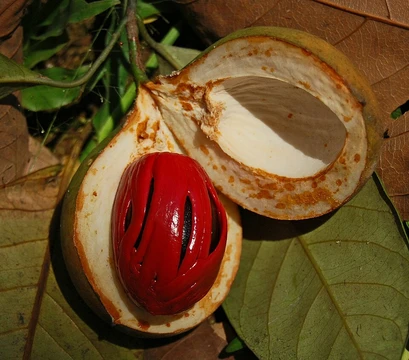
Plant morphology
Study of plant form, structure, and development.

Plant morphology, also known as phytomorphology, is the study of the physical form and external structure of plants. It is considered distinct from plant anatomy, which examines internal structure at the microscopic level. Plant morphology is useful in the visual identification of plants and has been informed by recent molecular biology studies investigating the molecular processes involved in the conservation and diversification of plant morphologies.
- field
- Botany
- known_for
- Study of plant form and structure; identification of homologous and convergent structures; discovery of alternation of generations
Lore & Background
Plant morphology represents a study of the development, form, and structure of plants, with an attempt to interpret these on the basis of similarity of plan and origin. There are four major areas of investigation: comparative morphology, which examines structures across different species to identify homologies; vegetative and reproductive structure analysis; study at multiple scales from ultrastructure to growth habit; and examination of developmental patterns. The detailed study of reproductive structures led to the discovery of the alternation of generations in all plants and most algae by the German botanist Wilhelm Hofmeister. Morphologists make comparisons between structures in different plants to determine whether similarities arise from shared ancestry (homology) or independent adaptation to common environmental pressures (convergence). For example, cactus spines are homologous to leaves, while the feathery appearance of Bryopsis plumosa fronds and Asparagus setaceus stems is convergent. Vegetative structures include shoot and root systems, while reproductive structures vary by plant group and are considered more useful for classification.
Reader's Guide
Plant morphology is significant as a foundational discipline for understanding plant evolution, classification, and identification. By distinguishing homologous from convergent structures, morphologists provide essential interpretations that evolutionary biologists use to construct phylogenies. The discovery of alternation of generations unified the understanding of plant life cycles across all plants and most algae. Morphological characters—both quantitative (e.g., petal width) and qualitative (e.g., leaf shape)—are used for plant identification and description. Recent molecular studies have shown that transcriptome conservation patterns mark crucial ontogenetic transitions, potentially constraining evolutionary diversification. The field overlaps with plant anatomy, evolution, paleobotany, biodiversity, systematics, physiology, and ecology, making it central to multiple biological sciences.
Did You Know?
- Plant morphology is distinct from plant anatomy, which studies internal structure at the microscopic level.
- Cactus spines are homologous to leaves, sharing the same basic structure and development.
- The detailed study of reproductive structures led to the discovery of alternation of generations in all plants and most algae.
- Quantitative morphological characters include measurable features such as flower petal width, while qualitative characters include leaf shape or flower color.
Defining the Discipline and Its Boundaries
Plant morphology, also called phytomorphology, is the branch of biology devoted to the visible form and external architecture of plants. It is deliberately set apart from plant anatomy, which turns its attention to internal organization at the microscopic and subcellular level. This boundary has practical consequences: a botanist working in the field to identify an unknown specimen will lean on morphological characters—shape, arrangement, surface features—rather than histological sections. In recent decades the field has acquired a molecular dimension. Researchers in molecular biology now probe the genetic and transcriptomic mechanisms that explain why certain morphological traits are conserved across lineages while others diversify freely. A particularly revealing line of inquiry has shown that patterns of transcriptome conservation tend to flag critical ontogenetic transitions in the plant life cycle. Those same conserved patterns may act as evolutionary constraints, limiting how far morphology can diverge from ancestral blueprints. In this way, a discipline once defined almost entirely by careful visual observation now sits at the intersection of genomics, developmental biology, and evolutionary theory.
The Comparative Core: Homology and Convergence
The engine of plant morphology is comparison. The morphologist surveys structures across many species, within and between taxa, and asks why they resemble one another. The answer resolves into one of two explanations. Homology means the resemblance traces back to shared ancestry and common inherited genetic pathways. The leaf is the textbook case: pine, oak, and cabbage foliage look nothing alike, yet they share fundamental structural and positional features. The morphologist pushes further, recognizing that cactus spines develop through the same basic pathway as leaves in other plants, making them homologous despite their radically different appearance. Convergence, by contrast, arises when unrelated lineages independently evolve similar forms under comparable environmental pressures. The feathery branching of the alga Bryopsis plumosa and the stems of Asparagus setaceus look strikingly alike, yet one is a seaweed and the other a flowering plant. Likewise, many cacti and Euphorbia species share a growth form that reflects a common solution to hot, arid conditions rather than close kinship. Sorting these two patterns apart is essential for any honest reconstruction of plant evolution.
Four Overlapping Pillars of Investigation
Plant morphology is not a single narrow inquiry but a framework with four interlocking areas of study, each bleeding into a neighboring biological discipline. The comparative dimension—examining structures across species and drawing ideas about similarity—overlaps directly with plant evolution and paleobotany. The second pillar covers both vegetative and reproductive structures. Vascular plants possess a shoot system of stems and leaves plus a root system, while reproductive organs vary enormously: flowers and seeds in angiosperms, sori in ferns, capsules in mosses. Detailed study of these reproductive forms was instrumental in uncovering the alternation of generations shared by all plants and most algae, linking morphology to biodiversity and systematics. The third pillar spans an extraordinary range of scales, from ultrastructure visible only under an electron microscope and cytology via optical microscopy—where the field overlaps with anatomy—to the largest scale of growth habit, the overall architecture that distinguishes a tree from an herb or a grass. The fourth pillar tracks developmental patterns, overlapping with physiology and ecology.
Development, Indeterminacy, and the Living Blueprint
One feature that sets plant morphology apart from animal body plans is the principle of developmental indeterminacy. An animal, once its body plan is laid down in early life, produces essentially all the structures it will ever possess. A plant, by contrast, never stops building. Throughout its entire life, a living plant retains embryonic tissues that continuously generate new leaves, stems, roots, and reproductive organs. The morphologist studies not just the final form but the process by which each new structure originates, matures, and integrates into the growing organism. The timing of when a structure begins to develop and the environmental conditions it encounters during maturation can both shape its ultimate form. This developmental perspective overlaps with plant physiology and ecology, because the same genetic program can yield different morphological outcomes depending on light, water, temperature, or season. Modern molecular work has added another layer: transcriptome conservation patterns marking key ontogenetic transitions appear to impose evolutionary constraints, suggesting that the plant's capacity for continuous, flexible growth is itself bounded by deep genetic regularities.
Frequently Asked Questions
What is Plant morphology?
Plant morphology, sometimes called phytomorphology, is the branch of botany devoted to the visible form, external architecture, and developmental patterns of plants. It sits at the whole-organism level, asking how structures are arranged and shaped rather than what happens inside cells.
How does Plant morphology differ from plant anatomy?
Morphology focuses on the macroscopic, externally observable features of a plant, while anatomy peels back into internal organization at the cellular and tissue level. The two fields complement one another but answer fundamentally different questions about structure.
What is Plant morphology best known for discovering?
The field is celebrated for distinguishing homologous structures (shared through common ancestry) from convergent structures (similar because of independent evolutionary pressure) and for elucidating the alternation-of-generations life cycle in plants.
Why is Plant morphology practically useful?
It supplies the visual and structural framework that field botanists, ecologists, and horticulturists rely on to identify species in the wild without a microscope or DNA sequencing. It also underpins how we classify, name, and communicate about the enormous diversity of plant forms.
How has modern molecular biology reshaped Plant morphology?
Recent genetic and developmental studies have uncovered the molecular pathways that explain why certain plant body plans are conserved across lineages while others diverge dramatically. This has given the traditionally descriptive discipline a mechanistic, gene-level foundation that was unavailable to earlier morphologists.
More in Plant Biology 1-16
Spotted an error? Know more?
This is a living reference — every entry is fact-audited, and reader corrections feed straight into our audit queue. Suggest an edit · See this site's audit record